1. kVA, kW and why the nameplate lies to you
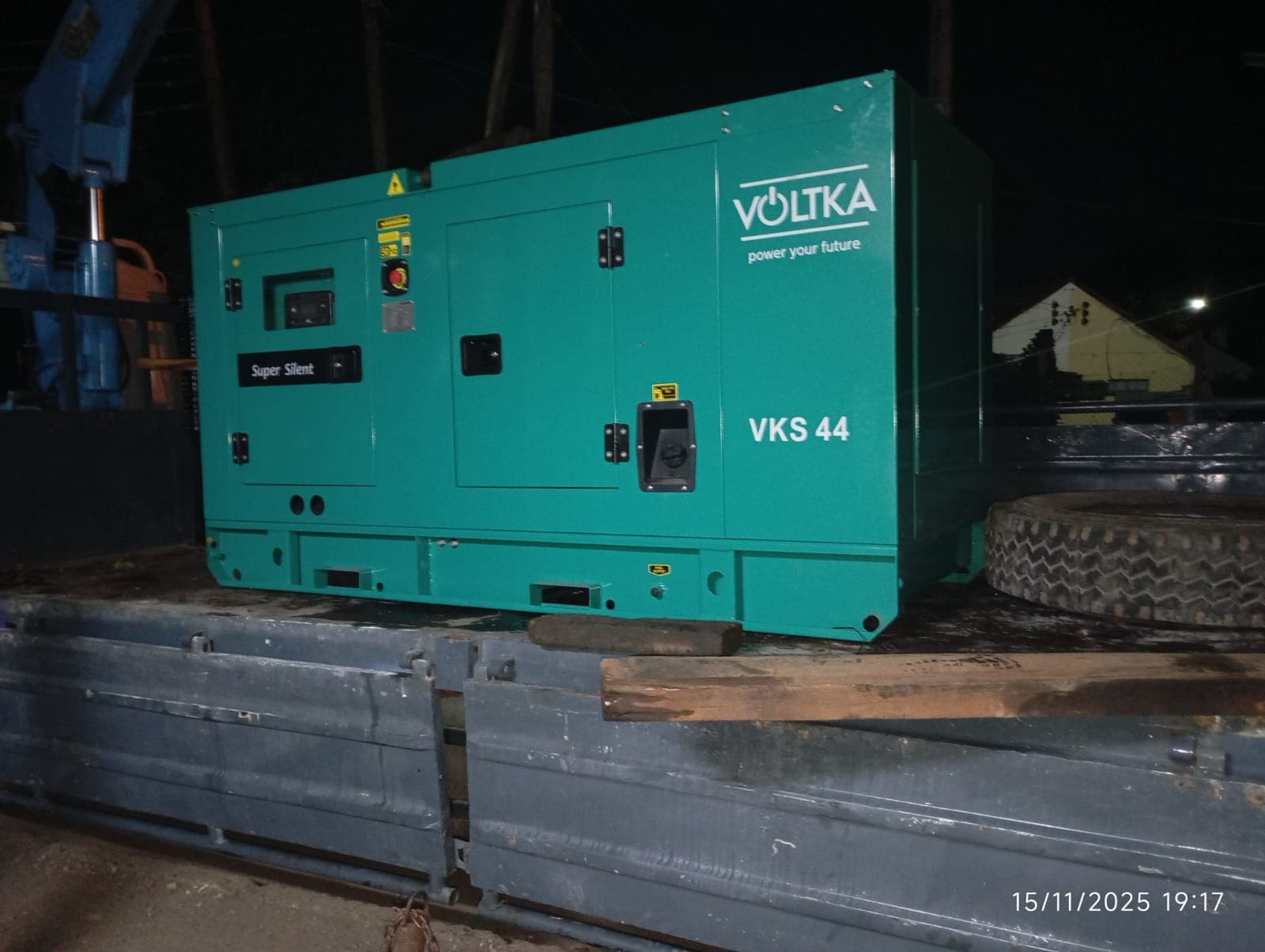
The first argument on almost every project is the size of the set, and it usually starts from the wrong number. A generator's nameplate is given in kVA — apparent power — but your equipment does real work in kW. The two are linked by the power factor (PF), the ratio of useful power to the total power the alternator has to push. For diesel sets the industry convention is a lagging PF of 0.8, so an 800 kVA set is only an 640 kW machine. Specify in kW, confirm the PF of your actual load, then convert — never the other way round.
The reactive component matters because motors, transformers and fluorescent gear draw magnetising current that does no work but still heats the alternator windings and loads the engine. A site full of induction motors running at PF 0.65 will pull far more kVA than its kW figure suggests, which is why power-factor correction at the main board is often cheaper than a bigger genset.
Get this number wrong in either direction and you pay. Oversize the set and it spends its life lightly loaded, which — as we cover below — destroys diesel engines through wet stacking. Undersize it and the first big motor start collapses the voltage, drops out contactors and trips the main breaker. The right answer is rarely "round up to the next model"; it is a load study.