Problem
Diesel and grid bills are eroding margins.
EmersonEIMS solution
Load-profile based solar/hybrid sizing with realistic yield and payback model.
Business outcome
Lower kWh cost, capped exposure to tariff and fuel volatility.
B2BEmersonEIMS serves commercial, industrial, healthcare, telecom, hospitality, government & contractor clients.• Engineering-led • SLA-backed • Documented commissioning
The EmersonEIMS Solar Hub covers everything solar in Kenya: grid-tie and hybrid systems, solar water pumping for boreholes and irrigation, commercial rooftops, battery storage and generator-solar hybrids that cut diesel bills by half or more.
Installations across Kenya and East Africa with county-level service reach and 3-year workmanship warranty.
Talk to an EmersonEIMS engineer · All services · All AI tools
Solar design, supply, installation and O&M for businesses that need to cut energy cost without risking uptime. Backed by independent sizing, bankable proposals and post-install monitoring.
Diesel and grid bills are eroding margins.
Load-profile based solar/hybrid sizing with realistic yield and payback model.
Lower kWh cost, capped exposure to tariff and fuel volatility.
Past solar quotes felt copy-pasted and nobody owned the result.
Engineer-led design, equipment selection and single-point installation contract.
One accountable partner from feasibility to commissioning and beyond.
Systems underperform after year 1 with no monitoring.
Inverter monitoring, scheduled cleaning, performance audits and O&M plan.
Documented yield, faster fault response, protected investment.
Your complete guide to solar energy in Kenya. From sizing calculators to installation, maintenance to financing — everything you need to harness the power of the sun.
Systems Installed
Total Capacity
Counties Served
Client Satisfaction
Kenya's location on the equator makes it one of the best places in the world for solar energy
Kenya has excellent solar irradiation year-round
Modern panels last 25-30 years with minimal degradation
Average electricity bill savings with solar
Typical ROI timeframe for solar investment
Real prices. No hidden fees. Know exactly what you're paying before you commit.
Small homes, 3-4 rooms
Includes:
Estimated Monthly Savings:
KES 8,000-12,000/month
Medium homes, offices
Includes:
Estimated Monthly Savings:
KES 15,000-22,000/month
Large homes, multiple ACs
Includes:
Estimated Monthly Savings:
KES 30,000-45,000/month
Shops, small factories
Includes:
Estimated Monthly Savings:
KES 60,000-85,000/month
Schools, hotels, factories
Includes:
Estimated Monthly Savings:
KES 150,000-200,000/month
Large factories, farms
Includes:
Estimated Monthly Savings:
KES 300,000-600,000/month
* Prices vary based on site conditions, battery configuration, and specific requirements. Contact us for a detailed quotation.
We only stock Tier-1 panels with proven performance and bankable warranties
| Brand | Origin | Efficiency | Warranty | Tier | Price Range | Best For | Rating |
|---|---|---|---|---|---|---|---|
| JA Solar | China | 21.5% | 25 Years | Tier 1 | Premium | Commercial, Industrial | ★★★★4.8 |
| LONGi | China | 22.3% | 25 Years | Tier 1 | Premium | All applications | ★★★★4.9 |
| Jinko Solar | China | 21.8% | 25 Years | Tier 1 | Mid-Premium | Residential, Commercial | ★★★★4.7 |
| Trina Solar | China | 21.6% | 25 Years | Tier 1 | Mid-Premium | Large-scale projects | ★★★★4.7 |
| Canadian Solar | Canada | 21.1% | 25 Years | Tier 1 | Mid-Range | Budget-conscious | ★★★★4.5 |
| SunPower | USA | 22.8% | 25 Years | Tier 1 | Ultra-Premium | Limited roof space | ★★★★4.9 |
See the impact of solar energy on our clients' operations
KES 2.8M monthly electricity bills, 100% grid dependency, frequent outages disrupting guests
250kWp solar array with 400kWh battery storage - 65% energy savings, 60% renewable energy
556
Solar Panels
250kWp
System Capacity
65%
Energy Savings
3.2 years
Payback Period
We understand that solar is an investment. That's why we offer flexible payment plans to make clean energy accessible to everyone.
Deposit Required
KES 225,000
Monthly Payment
KES 45,938
5% Interest • Total: KES 776,250
We stand behind our work with ironclad guarantees
All our Tier-1 solar panels come with manufacturer 25-year performance warranty
If your system doesn't achieve projected savings in year 1, we'll make it right
Professional assessment of your property with detailed proposal - no obligation
Any maintenance issue addressed within 48 hours anywhere in Kenya
All installations by ERC-licensed technicians following international standards
30-day satisfaction guarantee on all equipment purchases
Engineering reference
Kenya sits on the equator with some of the best solar resource on earth — and most systems here still under-perform their brochure. This is the maths we use to size arrays, batteries and inverters so the yield survives heat, dust and the real load curve of a Kenyan business.
A solar panel's nameplate watt is measured under Standard Test Conditions (1,000 W/m², 25 °C cell temperature). What matters on a roof is how many hours per day the sun delivers that reference intensity — peak sun hours (PSH). Most of Kenya enjoys 5.0–6.0 PSH, among the highest sustained figures anywhere, with the arid north (Turkana, Marsabit) higher still and the misty highlands lower. Daily energy is, to first order, simply array size × PSH × system efficiency.
The catch is the performance ratio (PR) — the slice of theoretical yield you actually keep after inverter losses, wiring, soiling, heat and mismatch. A well-built system in Kenya runs a PR of about 0.75–0.80; a dusty, hot, badly-strung one can drop below 0.65. That gap is the difference between a system that pays back and one that disappoints, and it is decided at design and install, not at purchase.
So sizing starts from the load, not the roof. Measure the daily energy demand in kWh, divide by PSH and PR, and you have the array size. Working from "how many panels fit" is how sites end up with arrays that look impressive and still fail to carry the afternoon chiller load.
Array sizing from energy demand
P_array (kWp) = E_daily ÷ (PSH × PR)
| Region | Peak sun hours | Notes |
|---|---|---|
| Northern arid (Turkana, Marsabit) | 6.0–6.5 | Highest resource; heat derating matters most |
| Eastern / Coast (Mombasa, Kitui) | 5.5–6.0 | High yield; humidity & salt at coast |
| Rift Valley (Nakuru, Naivasha) | 5.5–5.8 | Strong, stable resource |
| Nairobi & central | 5.0–5.5 | Good; July–Aug cloud dip |
| Western highlands (Kisii, Kakamega) | 4.5–5.0 | Cloudier; size up the array |
Counter-intuitively, panels make less power as they get hotter — and on a Kenyan roof the cells routinely sit at 55–65 °C, far above the 25 °C test condition. Crystalline silicon loses roughly 0.35–0.45% of its output per °C above 25 °C (the module's temperature coefficient of power). At a 60 °C cell temperature that is a real-world loss of around 12–16% off the nameplate, every clear afternoon, before any other loss.
This is why mounting matters as much as the module. Panels need an air gap behind them to convect heat away; flush-mounting onto a hot iron-sheet roof with no clearance bakes them and quietly throws away yield. We design for ventilation, choose modules with a low (better) temperature coefficient for hot sites, and rate string voltages at the coldest dawn temperature — because cold mornings push voltage up toward the inverter's limit while hot afternoons pull it down.
Temperature-corrected module power
P_cell = P_stc × [1 + γ × (T_cell − 25)]
For any site that wants power after dark or through an outage, the battery is the most expensive and most misunderstood part. Two numbers govern it: days of autonomy (how long the bank carries the load with no sun) and depth of discharge (DoD) — how much of the rated capacity you dare use each cycle. Lead-acid batteries hate deep cycling; draw them below 50% routinely and their life collapses. Lithium iron phosphate (LiFePO₄) will cycle to 80–90% DoD for thousands of cycles, which is why — despite a higher sticker price — it is usually the cheaper battery per usable kWh over its life.
Sizing the bank means inflating the energy you actually need by the usable DoD and the round-trip and inverter efficiencies. Skip that and the bank looks fine on paper but sags every cloudy week. We size for the worst realistic run of dull days at the site, not the annual average — a system that fails in the one rainy week that matters has failed, regardless of its yearly numbers.
Usable battery capacity required
C (kWh) = (E_daily × Days) ÷ (DoD × η)
| Chemistry | Usable DoD | Cycle life | Best for |
|---|---|---|---|
| Flooded lead-acid | ~50% | 500–800 | Lowest upfront, occasional backup |
| Sealed AGM/Gel | ~50% | 600–1,200 | Maintenance-free standby |
| LiFePO₄ (LFP) | 80–90% | 3,000–6,000 | Daily cycling, lowest cost/kWh over life |
| NMC lithium | 80–90% | 2,000–4,000 | Compact, weight-sensitive sites |
A panel has one operating point where it delivers maximum power, and it moves constantly with sun and temperature. A maximum power point tracking (MPPT) charge controller or inverter continuously hunts that point; a cheaper PWM controller simply clamps the panel to the battery voltage and throws the difference away — often 20–30% of the harvest on a cold, bright morning. On anything beyond a tiny system, MPPT pays for itself quickly.
String design is where installs quietly go wrong. Wire too few panels in series and the string voltage never reaches the inverter's MPPT window on hot afternoons, so it under-harvests. Wire too many and the cold-morning open-circuit voltage can exceed the inverter's maximum and damage it. The string voltage must be checked at both temperature extremes, and the conductor sized so volt-drop stays under about 2–3% — long DC runs on undersized cable are a yield leak you never see on a spec sheet.
The right architecture follows the tariff and the load, not fashion. A business with a reliable grid and high daytime consumption wins most from a grid-tied system that offsets expensive daytime units — no battery, fast payback. A site with frequent outages needs a hybrid (battery-backed) system. Only a site with no grid at all — a remote lodge, a borehole, a mast — justifies a full off-grid design with the storage cost that implies.
The honest decision tool is levelised cost of energy (LCOE): total lifetime cost divided by total lifetime kWh. A well-designed Kenyan PV system delivers solar electricity at roughly KSh 8–15 per kWh over 25 years — well under both commercial grid tariffs and the KSh 40+ per kWh of diesel generation. That spread is the entire business case, and it is why we so often pair solar with an existing generator: the panels carry the day cheaply, the genset becomes true backup, and the diesel bill falls by half or more.
Simple payback period
Payback (yrs) = CAPEX ÷ (E_annual × Tariff_saved)
Complete guide to sizing your solar system for Kenya
Full catalog with panels, inverters, batteries, and pricing
Excel calculator for solar investment analysis
Home solar systems with battery backup for reliable power supply.
.png&w=3840&q=75&dpl=dpl_CyCpoL9Z3E8JoXVgRPMsQpH5VLNb)
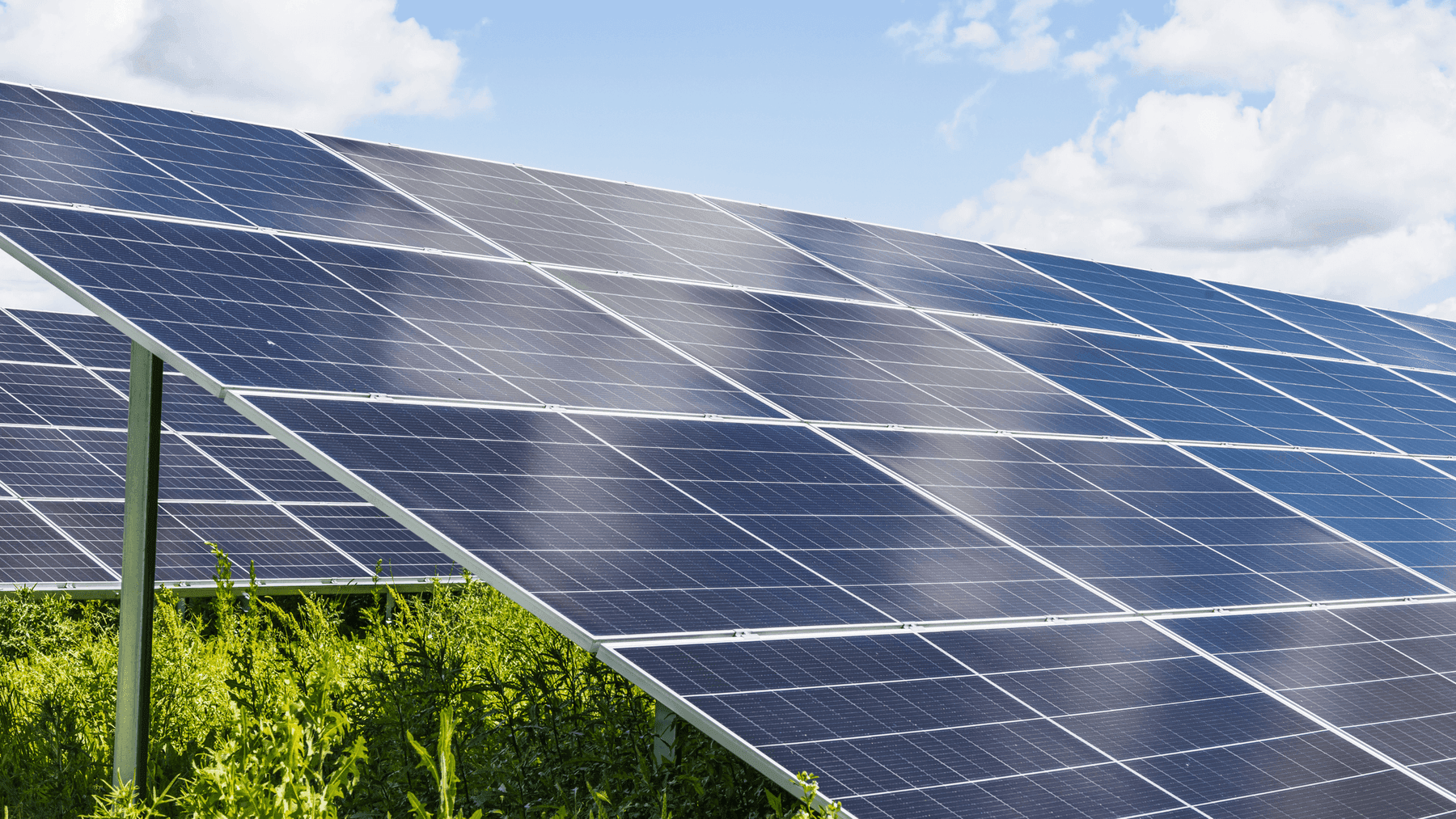


Book a site survey with our solar engineers. We design to your roof, load profile and budget.
M-Pesa Payment: 0768860665 | Mon-Sat 8AM-6PM
Free diagnostic guides
Before you replace anything, work out what the array should be producing for the conditions on the day. Our engineers have written the same diagnostic sequence they use on site — yield loss, soiling and shading, charge controllers, and DC bus and isolation faults.
Solar PV diagnosis & repair guidesFrom residential rooftop systems to commercial arrays covering hundreds of kW — we design, install, and maintain solar solutions across all 47 Kenya counties.
Or choose a different option:
Need to speak directly?